

You’ll begin to reconcile your accounts with the information in your financial statements. You decrease expense accounts by crediting them and debiting Income Summary for the total of your expenses. By looking at the chart above, you can see that in order to decrease revenue accounts, you must debit them. To close these accounts, you debit revenue to zero and credit the Income Summary for the total revenue. Free accounting templates can help you keep your journal entries in order and manage your bookkeeping in a straightforward manner. Understanding this process helps businesses maintain transparency and efficiency in financial reporting and decision-making.
Common Documents for Book Closing
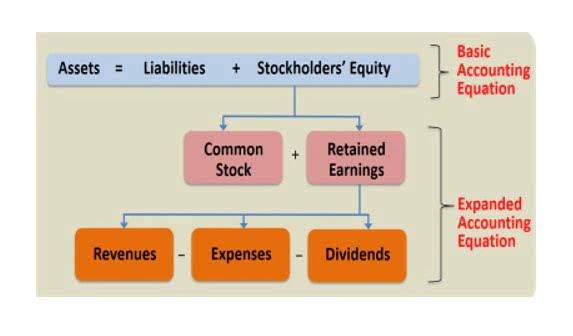
These records are then used to generate reports that can tell a business owner the financial status of their enterprise. This process helps owners stay on track with business goals and prepare for filing their income tax returns. Business owners can close their books by zeroing out their income and expense what are retained earnings accounts and then plugging net profit (or loss) into the balance sheet.

How to ensure your books are closed properly each month

In order to bring balances to zero, it’s important to understand which accounts need to be debited and which accounts need to be credited. Journal entries are transferred to the general ledger when they’re posted to an account, such as accounts receivable. At year-end, a company must count its physical inventory to confirm the accuracy of its records. This includes verifying quantities and conditions of all items, which should then be https://www.bookstime.com/articles/pharmacy-accounting matched with inventory records. The method of counting—whether it is done through a cycle count or full physical inventory—can affect both the efficiency of the process and the resulting data’s accuracy. Lean on tools like unified financial platforms and outsourced bookkeepers to develop this process and leave more time for your team to attend to the important, innovative tasks your startup is known for.
- This includes verifying quantities and conditions of all items, which should then be matched with inventory records.
- Closing the books can help you stop payments from being recorded in the wrong period.
- The process begins with verifying that all transactions for the period have been recorded correctly.
- This process helps owners stay on track with business goals and prepare for filing their income tax returns.
- It involves meticulous efforts to ensure that all financial activities are properly accounted for, resulting in the compilation of trustworthy financial statements.
- Publicly traded companies must close their books quarterly to meet SEC filing deadlines, ensuring timely submission of 10-Q reports.
Make a Preliminary Trial Balance

Temporary accounts include revenue, expense, and withdrawal/dividend accounts. That means that they need to have a balance of zero before you move into the next period. This is done by transferring the balance of temporary accounts into permanent accounts. Some accounting software automatically closes your income and expense accounts at year-end before adding your net profit (or loss) to your retained earnings account. Accounting software may create an automatic closing date as well as a password so transactions from before the closing date can’t be changed.
To make a long story short, accrual accounting records transactions before cash changes hands. Closing the books in accounting requires a process that reviews all your financial data, reconciles the accounts, and provides final totals that give you insight into your financial status. Income Summary is a temporary closing account used to store the closing balance of revenue and expenses. After transferring the balance of revenue and expense accounts to the Income Summary account, you must subtract revenue from expenses and close the Income Summary to equity/retained earnings. These items include accumulation (known as “accrual” in accounting) of real estate taxes or depreciation accrual, which need to be recorded to close the books. the closing process is sometimes referred to as closing the books. Reconciliations follow, comparing internal records with external statements such as bank records and supplier accounts.
- By closing the books, businesses effectively finalize all entries for the year, which allows for the creation of financial statements that give insights into the company’s financial health.
- The company needs to evaluate the current status and remaining lifespan of its assets to update their book value in the asset accounts.
- Net income is determined by subtracting the total expenses from the total revenue.
- Tackling steps like reviewing preliminary statements, reconciling accounts, and adjusting journal entries will help you get your data straight.
- Errors in financial data arise for several reasons, including client self-reported forms or transferring information from hard copies to digital versions.
- But you won’t know exactly how much of that money you get to keep until you factor in what you’ve spent, what you still owe, and any upcoming expenses you need to plan for.